
No, not instead. You can absolutely use ChatGPT to help you understand what happened to you, but not in place of a lawyer to handle a Florida auto injury claim. It is a good assistant and an unreliable authority, and on an injury claim the difference between those two things is measured in money.
I am not an AI skeptic. These tools are useful and I use them. I would rather tell you where the line sits today than pretend it is further out.
What is AI actually good for after a car accident?
More than people expect. If you have been in a wreck, these are real uses:
- Translating the paperwork. A PIP log, a declarations page, a benefits denial letter. Ask what it means in plain English and you will usually get a helpful answer, because you handed it the document.
- Organizing your own file. A timeline of your treatment, a list of every provider you saw and when, mileage to appointments, days of work missed. Tedious work, AI is fast at it, and an organized client makes a stronger claim.
- Cleaning up your writing. Grammar, tone, and length on a letter you have to send, to your employer about missed work or to a provider about a bill.
- Generating the questions. The best use of it. Ask what you should ask a personal injury lawyer, then bring the list to the consultation. You will get more out of the free hour than most people do.
Notice the pattern. AI is strong at working with information you hand it and weak at telling you what the law is. On the first side of that line it helps you. On the second it costs you.
Where does AI get Florida injury law wrong?
Start with the word people throw around: hallucination. A language model produces the most plausible-sounding answer, not the verified one. It does not know when it is wrong and it never sounds unsure, so a bad answer arrives in the same confident paragraphs as a good one. Federal judges have sanctioned licensed attorneys over this, for briefs citing cases that did not exist because AI invented them and nobody checked.
I get these calls. A client will tell me “ChatGPT told me X,” and X simply is not true. Not a nuance, not a close call, just wrong. When AI misstates Florida law, in my experience it comes down to one of three things.
1. It mistakes proposed legislation for actual law. This one got me. AI once had me convinced the Legislature had amended the past medical damages rules that came in with House Bill 837, Florida’s 2023 tort reform law, now Florida Statutes section 768.0427. It was detailed, it was confident, and what it described was a bill that had been filed and never became law. I caught it because I verify everything independently before I rely on it, which is the only reason it cost me nothing. Hundreds of bills get filed in Tallahassee every session and most die quietly, but a filed bill draws news coverage, blog posts, and law firm commentary, so the internet fills up with pages describing a change that never took effect. AI reads that coverage and reports it back as current law.
2. Its sources are marketing pages, not law. A large share of what is written online about Florida injury law exists to generate clicks or sign clients, not to be accurate. Those pages frame things however gets the phone to ring, and they are built to rank, so the tools pulling from the web are fed them disproportionately. When the source is a sales pitch, a confident summary of it is still a sales pitch.
3. It gives a national answer to a Florida question. This is the one that burns people worst, because it is invisible. Florida is a no-fault state, so your own PIP coverage pays first no matter who caused the crash, you have 14 days to get your first treatment, and you have to clear a permanent injury threshold before you can reach the other driver for pain and suffering at all. Most of the country does not work that way, and a general question gets a fifty-state blend.
It is worse than average here. A lot of the people hurt on Front Beach Road or out on Highway 98 are visitors, and a visitor asking a chatbot about a Bay County crash gets their home state’s rules mixed in with ours. If you come from a state that lets you go straight after the at-fault driver, nothing in that answer is going to tell you Florida made you use your own PIP first and put a 14-day clock on it.
Is this a real problem or a theoretical one?
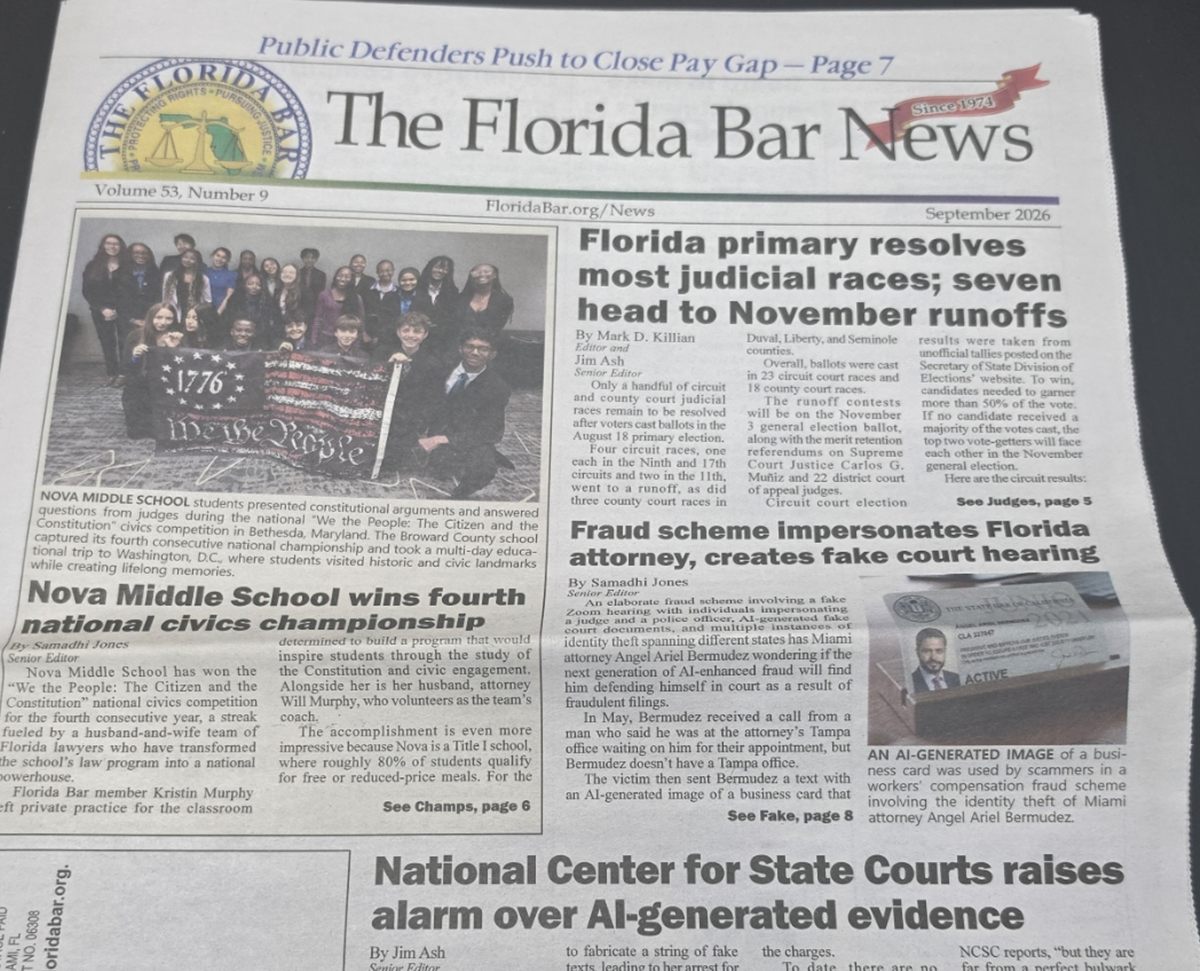
The September 2026 issue of The Florida Bar News landed on my desk while I was writing this, and the front page makes the point for me. It reports the National Center for State Courts sounding an alarm over AI-generated evidence, citing what looks like the first case where a deepfake video was submitted to a court as authentic and caught. The plaintiffs who filed it were representing themselves, and the judge dismissed their case. Nobody was there to catch it before it went in.
What actually goes wrong if the answer is off?
Injury claims are full of one-way doors, which is why an unreliable answer matters more here than it would about a recipe.
- Treatment timing. Florida requires your first medical treatment within 14 days of the crash for your PIP benefits to apply, and nothing brings that coverage back once the window closes. See Florida Statutes section 627.736.
- The filing deadline. Most Florida negligence claims now have to be filed within two years. An answer quoting the old four-year rule, or another state’s, ends your claim rather than weakening it.
- A signature. Sign a release and the case is over, whatever you learn a week later. Almost nobody who signs early knows what their medical picture looks like in six months.
Can AI negotiate with the insurance company for me?
No, and this is where the whole idea falls apart. An adjuster’s job is to close your file for as little as the file justifies, and how well your letter is written does not change that. What moves a number is the medical documentation, the coverage available, and whether the other side believes you will file suit.
AI cannot file a lawsuit, take a deposition, subpoena records, or try a case, and the adjuster knows it. It also cannot tell you what your claim is worth, because it has no access to what carriers actually paid on comparable injuries and has never seen your records. If you are staring at a number right now, read whether to accept the insurance company’s offer instead of asking a chatbot.
Will this change?
Maybe, and I would not bet against it. I use these tools in my own practice. They are good at checking grammar and at helping summarize a stack of medical records, and everything they hand back gets verified and carefully scrutinized before I rely on it. Use it, then check it.
For now, AI is a good place to start and a terrible place to stop. For the fuller picture, here is whether you need a lawyer to settle a Florida car accident claim and what lawyer fees look like, since cost is usually what is really behind the question.
Key takeaways
- Use AI as an assistant, not an authority. It is good with information you hand it and unreliable about what the law says.
- Best uses: translating insurance paperwork, organizing your treatment timeline, fixing your own writing, and generating the questions to ask a lawyer.
- The three ways I see it go wrong: proposed bills reported as enacted law (it did this to me once on House Bill 837), one-sided marketing pages repeated as authority, and national answers to Florida questions.
- It never sounds unsure. A hallucinated answer arrives in the same confident paragraphs as a correct one. That is what makes it dangerous unsupervised.
- The mistakes are permanent. The 14-day treatment window, the two-year filing deadline, and a signed release do not reopen because you got bad information for free.
Ask the chatbot whatever you want, then bring the answers to me and I will tell you which parts are actually true in Florida. No charge for the conversation, and no fee unless we recover for you. Call me, Phillip Stamman, at my Panama City Beach office: (850) 842-5449, or contact me here for a free consultation. More on how I handle car accident cases in Panama City Beach.
This post is general information about Florida law, not legal advice, and reading it does not create an attorney-client relationship. Statutes and deadlines change, and how any of this applies depends on facts specific to your situation. Talk to a lawyer about yours.
Stay safe out there,
Phillip Stamman
Solo Personal Injury Lawyer
Panama City Beach, Florida