
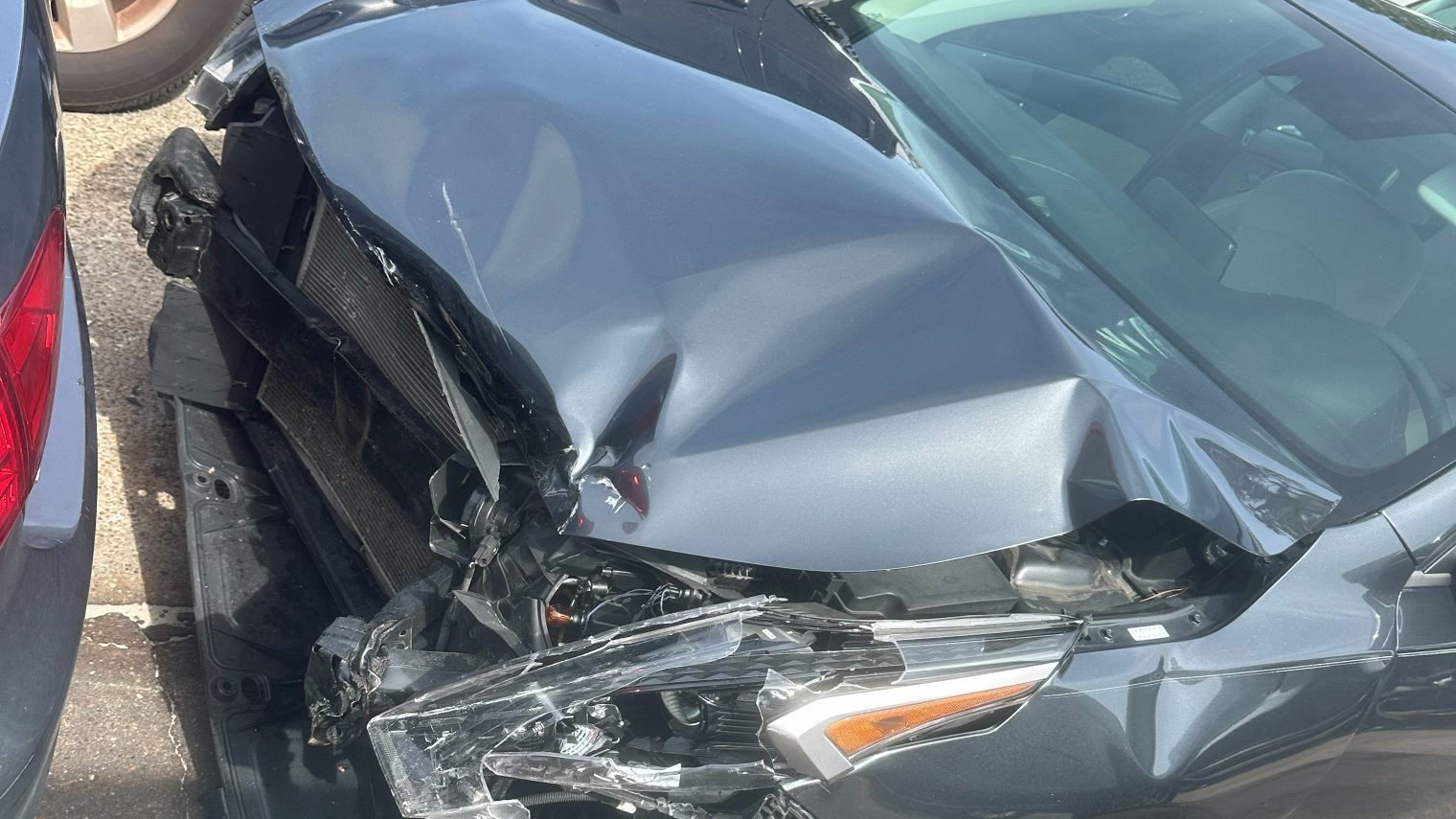
If you were just in a wreck in Florida and you were not at fault, two things matter more than almost anything else in the first two weeks: what gets said at the scene, and how quickly you see a doctor. Say very little about fault, pay close attention to what the other driver says, and get medical treatment within 14 days, because Florida law cuts off your own PIP medical coverage if your first visit comes later than that.
Everything else can be sorted out later. Those two things usually cannot.
What should I say at the scene of a car accident?
Here is what I tell people, and it is the shortest useful rule I know:
Everything you say at the scene can be used against you. Everything they say can be used for you. So say little, and listen close.
The first half of that is on every accident checklist on the internet. Do not apologize, do not speculate about what happened, do not tell the other driver you are fine, and do not guess at your speed. You are shaken up, running on adrenaline, and in no condition to give an accurate account of anything. “I’m sorry” is a reflex of decent people, and adjusters read it as an admission.
The second half is the part almost nobody tells you, and in my experience it is worth more.
At the scene, before anyone has spoken to an insurance company or had time to think about consequences, people tell the truth. They say “I never saw you.” They say “I was looking at my phone.” They say “I was trying to make the light.” Weeks later, once an adjuster has taken their statement, that same driver often has a tidier version of events where nobody did anything wrong.
So while you are keeping quiet, listen. Then write down what they said, word for word, as soon as you can. A note in your phone with the time on it is enough.
While you are at the scene, if you are physically able:
- Call 911 and let law enforcement respond, even if the damage looks minor and the other driver would rather handle it privately.
- Get medical attention if there is any chance you are hurt. Do not tough it out.
- Photograph everything before the cars are moved: both vehicles, the damage, the positions in the roadway, skid marks, debris, traffic signals, and the wider intersection.
- Exchange insurance and contact information, and photograph the other driver’s insurance card and license rather than copying it down by hand.
- Get names and numbers for witnesses. People leave quickly, and a neutral witness is one of the most valuable things a case can have.
- Write down what the other driver said, as close to their exact words as you can manage.
Why does this matter so much in Panama City Beach?
Because a large share of the drivers on Back Beach Road and Front Beach Road during tourist season do not live here.
If the driver who hit you is in a rental car and flies home to Ohio on Sunday, what they said standing on the shoulder in Bay County may be the only candid thing you ever get from them. You are not going to run into them again. Their insurer is in another state, and their memory of the crash will be filtered through an adjuster before you hear it a second time.
That is also why calling law enforcement matters more here than it might somewhere else. Throughout the Panhandle, “let’s just exchange info and not involve the police” tends to work out badly for the person who was not at fault. The officer’s report is also where you later find out who owned the other car and who insured it, which is why it is worth knowing how to get a copy of your crash report.
Why does the 14-day deadline matter so much?
This is the one that costs people real money, and it is the mistake I see most often.
Under Florida Statutes section 627.736, your Personal Injury Protection benefits pay for your medical treatment only if your initial services and care are rendered within 14 days of the crash. Wait longer, and that coverage is simply not available to you. It does not matter how badly you were hurt, and it does not matter that you were not at fault. For the full breakdown of what PIP covers in Florida, including lost wages and the $10,000 limit, start there.
I have had multiple clients who waited too long to talk to an attorney, were genuinely injured, and let that 14-day window pass. Losing PIP does not just mean losing the medical coverage itself. It leaves them paying out of pocket, and it weakens the injury claim, because a gap between the crash and the first treatment is exactly the argument the other side wants to make: if you were really hurt, why did you wait three weeks to see anybody?
The reason good people miss this deadline is almost never laziness. It is that they felt fine. Adrenaline is a powerful painkiller, and soft tissue injuries in particular tend to announce themselves two or three days later, sometimes longer. By the time the stiffness sets in and does not go away, a week is already gone.
If there is any chance you were hurt, get evaluated early. The clock runs from the date of the crash, not from the date you decided you were injured. Who you see matters too, and it is worth ten minutes of research before you book: here is how to choose a chiropractor after a Florida car wreck.
What should I not do in the first two weeks?
Do not give a recorded statement to the other driver’s insurance company. You are generally not obligated to. That call often comes within a few days, while you are sore and medicated and have no idea yet how serious your injuries are, and everything you say is locked in.
Do not take an early settlement offer. Insurance companies will often move to settle a claim quickly, and sometimes that is because settling early is cheaper for them. A fast check written before anyone knows whether you need an MRI, an injection, or surgery is a good deal for exactly one party to the transaction, and it is not you.
Do not skip your follow-up appointments. Gaps in treatment get used against injured people constantly. If your doctor tells you to come back, go back.
Do not post about the crash on social media. A photo of you at a cookout looking cheerful will be used to argue you were not really hurt, fairly or not.
Do you actually need a lawyer for this?
Sometimes, honestly, no. If you were rear-ended at five miles an hour in a parking lot, walked away without a scratch, and the only issue is a bumper, you probably do not need me. Property damage claims for genuinely uninjured people are usually manageable on your own, and I would rather tell you that than sign you up.
Where it changes is when injuries are involved. Once there is treatment, PIP, lost time from work, an out-of-state driver, a coverage question, or an adjuster asking for a recorded statement, you are in a process built and staffed by people who do this professionally every day, and you are doing it once, hurt, while trying to get back to work.
That is the whole reason for my one hard rule:
Do not settle anything with an insurance company for your injuries until you have talked to a lawyer.
A consultation costs you nothing, and it takes a phone call. Knowing what your claim is actually worth before you sign a release is the difference between a resolved case and a permanent regret. If an offer has already arrived, read what to check before you accept a settlement offer first.
Key takeaways
- Say little at the scene, and listen closely. Your words can be used against you; theirs can support your claim. Write down what the other driver said as soon as you can.
- Call law enforcement, photograph everything before the vehicles are moved, and get witness contact information.
- Get medical treatment within 14 days. Florida’s PIP statute cuts off your medical coverage if your initial care comes later, and feeling fine at the scene is not evidence that you are.
- Do not give a recorded statement or accept an early offer from the other driver’s insurer before speaking with an attorney. Early settlements are frequently the cheaper outcome for the insurance company.
- Check your own policy too. In a tourist area, uninsured motorist coverage is often the only meaningful protection you have.
If you were hurt in a crash and you were not at fault, I will talk it through with you at no charge, and there is no fee unless we recover for you. You can reach me, Phillip Stamman, at my Panama City Beach office: call (850) 842-5449 or contact me here for a free consultation. If you want to know how attorney fees work before you call anyone, I wrote a plain-English breakdown of what car accident lawyers actually charge in Florida, and you can read more about how I handle car accident cases in Panama City Beach.
This post is general information about Florida law, not legal advice, and reading it does not create an attorney-client relationship. Every crash is different; talk to a lawyer about your specific situation.
Stay safe out there,
Phillip Stamman
Solo Personal Injury Lawyer
Panama City Beach, Florida